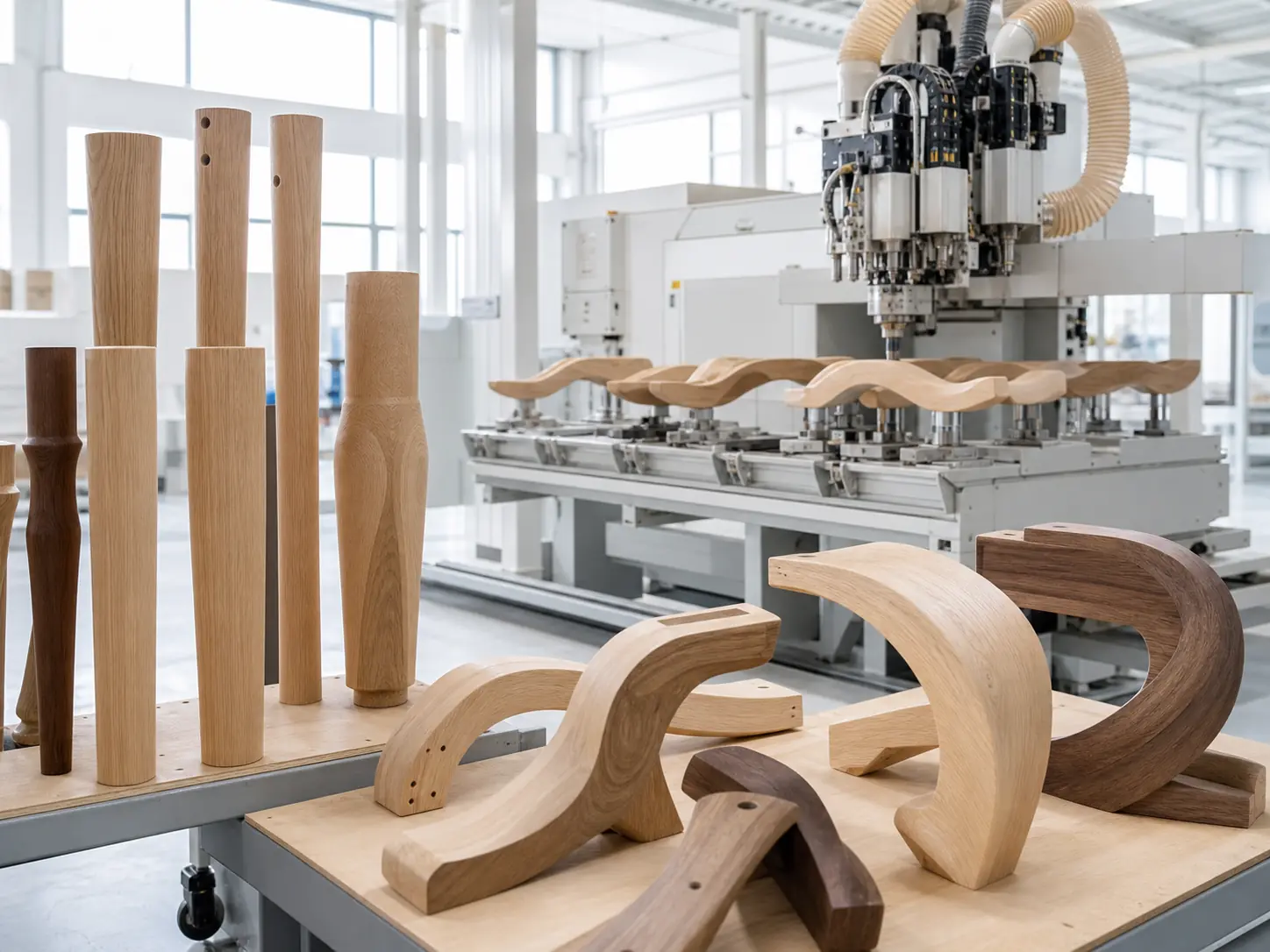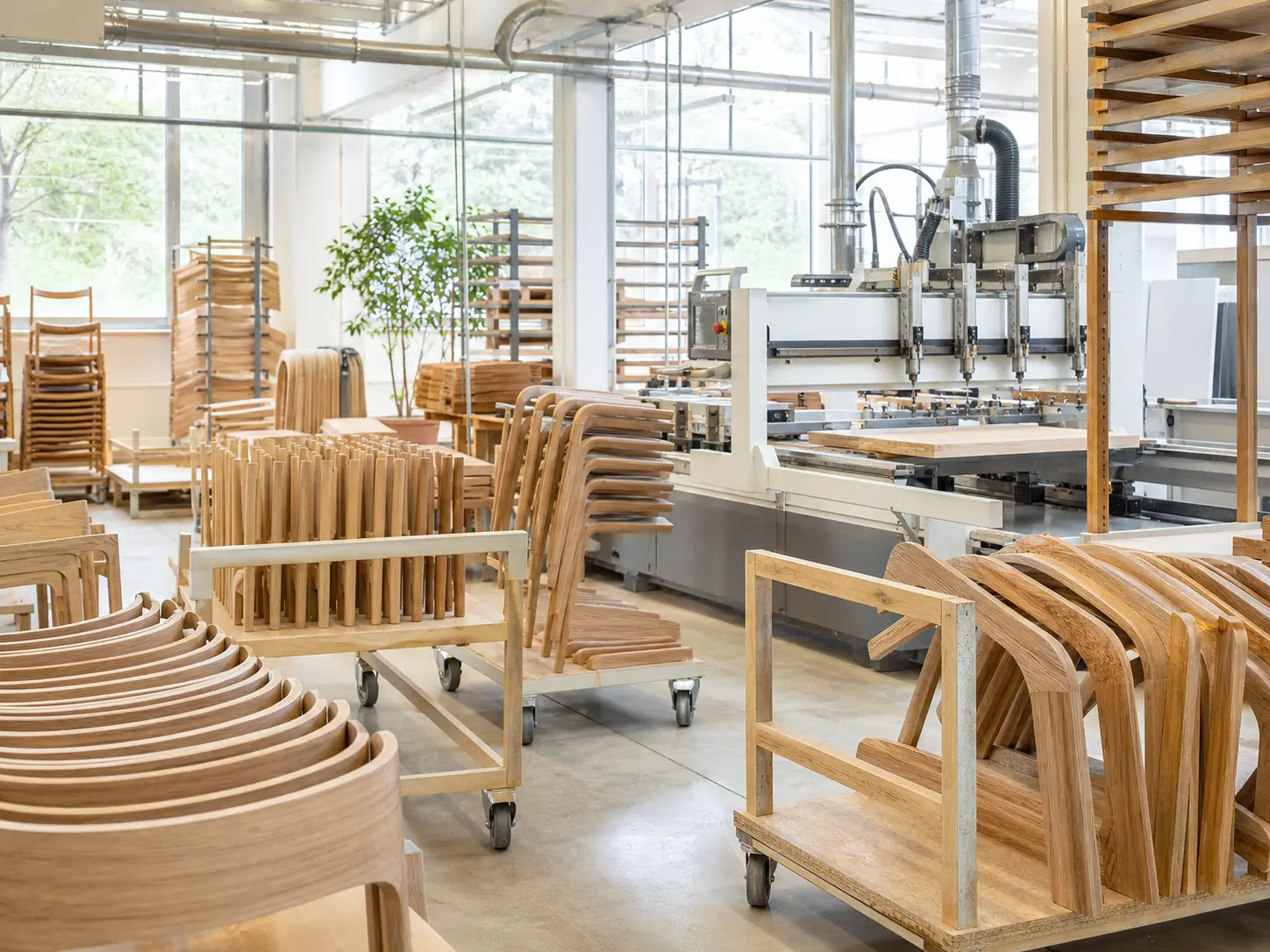
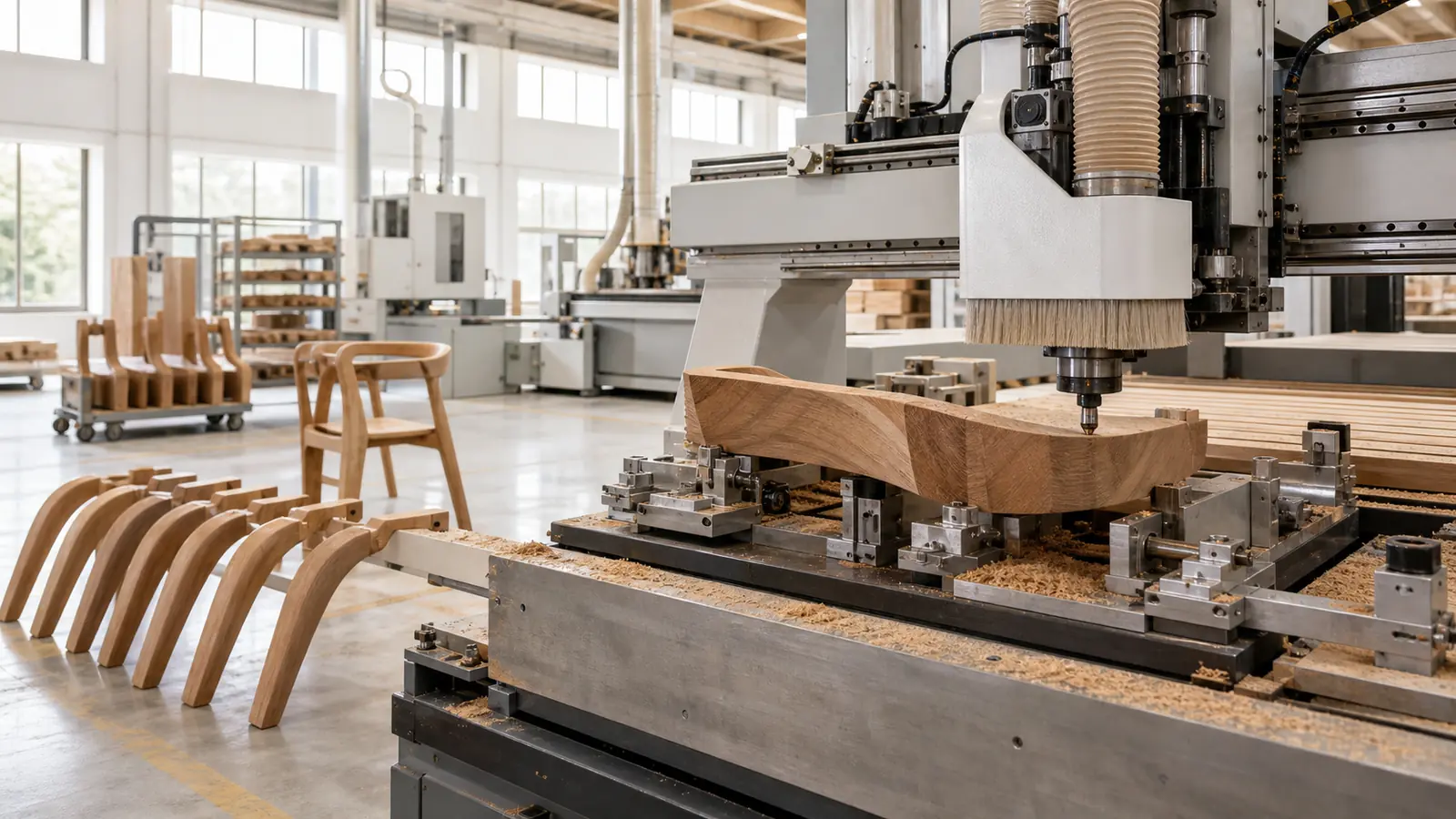
CNC machining curved solid wood furniture components in a bright modern factory
تصنيع الأثاث الخشبي الصلب

حلول إنتاج مبنيةحول القطع التي تصنعها

من أرجل الكراسي ومساند الذراع المنحنية إلى الأبواب والإطارات والوصلات والصنفرة، توائم JasperCNC معدات النجارة المناسبة مع مادتك وعمليتك وإنتاجك المستهدف وسير عمل مصنعك.

اعثر على حل بحسب قطعة العمل وهدف الإنتاج

اختر المكوّن أو العملية الأقرب إلى تشغيلك. يربط كل حل بين تحديات التصنيع وخطوات الإنتاج والقطع النموذجية وفئات الماكينات المناسبة.

Solid wood chair legs, backs and armrests in production
01 · تطبيق أولوية

تصنيع الكراسي

نسق القطع وتشكيل البروفيلات والتشغيل متعدد الزوايا والحفر والصنفرة وتجهيز الوصلات لقطع كراسٍ قابلة للتكرار.

عرض حل الإنتاج ←
Tapered and sculpted solid wood table legs
02 · تطبيق أولوية

تصنيع أرجل الطاولات والأثاث

أنتج أرجلًا مستديرة ومخروطية ومنحنية ومشكلة ببروفيلات قابلة للتكرار ووصلات محددة الموضع بدقة.

عرض حل الإنتاج ←
Machined solid wood furniture components organized for assembly
03 · تطبيق أساسي

قطع الأثاث الخشبي الصلب

A broad solution for legs, rails, frames, panels, connectors, and decorative components used across furniture categories.

عرض سير العمل ←
Curved and irregular solid wood components for furniture
04 · تطبيق خماسي المحاور

مكونات منحنية وغير منتظمة

Machine curved backs, armrests, special-shaped parts, and multi-face features with fewer manual repositioning steps.

عرض حل الإنتاج ←
Solid wood door and frame components in a machining factory
05 · أعمال الخشب المعمارية

إنتاج الأبواب والإطارات والقوالب

Plan, profile, drill, and machine door rails, stiles, frames, and moulded components for repeat production.

طابق فئات الماكينات ←
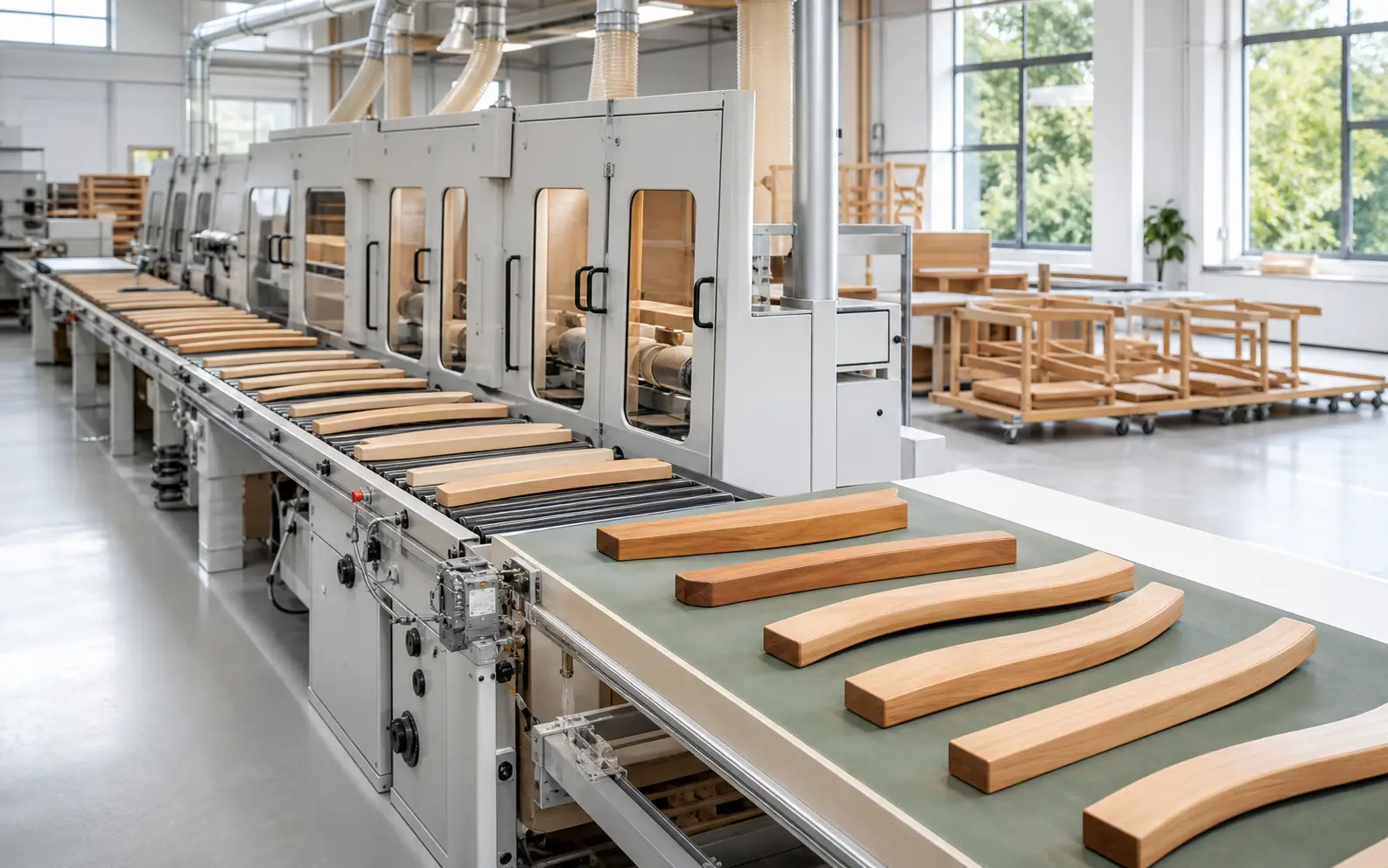
Automated sanding line for straight and curved solid wood parts
06 · تطبيق التشطيب

الصنفرة والتشطيب

قلّل الصنفرة اليدوية عبر صنفرة مستمرة للأسطح والحواف والفرش للقطع المستقيمة والمنحنية.

عرض حل الإنتاج ←
Drilled and mortised solid wood furniture parts
07 · تحضير التجميع

تجهيز الوصلات والنقر والحفر

Prepare mortises, tenons, holes, end cuts, and connector positions for faster, more consistent assembly.

طابق فئات الماكينات ←
Solid wood cabinet and framed furniture components
08 · خزائن الخشب الصلب

الخزائن والأثاث المؤطر

Focused on solid wood cabinet doors, frames, rails, and custom components rather than commodity MDF nesting.

طابق فئات الماكينات ←

سير عمل مترابط لمكونات الخشب الصلب

The machine is one part of the solution. The practical goal is to remove avoidable transfers, reduce dependence on manual templates, and prepare parts consistently for assembly.

01 · المادة

جهز الخام

Select, size, and reference hardwood blanks for stable processing.

02 · القطع

اقطع إلى الشكل

Rough-cut straight, curved, or irregular component profiles.

03 · التشغيل

فرّز وشكّل البروفيل

Form contours, faces, ends, and multi-angle features.

04 · الوصل

احفر ووصل

Create holes, mortises, tenons, and assembly references.

05 · التشطيب

صنفر الأسطح

Process faces, edges, curves, and transitions consistently.

06 · التجميع

جهز للتجميع

Deliver repeatable left/right and mating components downstream.

قلل اختناقات العمالة الماهرة

Move repeat shaping, drilling, and sanding operations from manual templates toward saved programs and defined fixtures.

حسن الاتساق بين القطع

Control critical profiles and joint positions so matching components arrive at assembly with fewer corrective steps.

وسع الطلبات المتكررة

Reuse validated programs, tooling, and workholding when an existing chair, table, frame, or furniture component returns.

ابدأ بالمكوّن ثم اختر الماكينة

These high-priority applications align most closely with solid wood furniture component manufacturing and JasperCNC’s multi-process equipment range.

Chair manufacturing with batches of curved solid wood components
01 · CHAIR MANUFACTURING

Repeatable Chair Parts from Cutting to Assembly

Build a process around chair legs, backs, armrests, curved rails, and joints. The target is consistent matching parts, fewer manual templates, and a clearer handoff between machining, sanding, and assembly.

Typical parts: legs, backs, armrests, rails, jointsCore processes: profiling, multi-face machining, drilling, sandingSuitable equipment: five-axis CNC, profile milling, multi-head drilling, sanding
Tapered table legs and curved solid wood furniture parts
02 · TABLE & FURNITURE LEGS

Control Profiles, Ends, and Joint Positions

Match the machine and fixture to round, tapered, curved, or carved leg geometry. Combine repeatable shaping with end cutting, mortise or tenon preparation, and accurately positioned drilling.

Typical parts: table legs, sofa legs, bed posts, supportsCore processes: shaping, turning/milling, end work, drillingSuitable equipment: five-axis CNC, profile milling, machining centers
Curved and irregular hardwood furniture components
03 · CURVED & IRREGULAR PARTS

Machine Complex Geometry with Fewer Re-Clamps

Use coordinated axes, stable workholding, and purpose-matched tooling for curved backs, armrests, decorative structural parts, and multi-angle features that are difficult to process with flat-panel equipment.

Typical parts: curved backs, armrests, sculpted railsCore processes: contouring, multi-angle milling, drilling, end cuttingSuitable equipment: five-axis CNC and special-shaped cutting systems
Automated sanding line processing straight and curved wood parts
04 · SANDING & FINISHING

Connect Machining Output to a Consistent Finish

Plan sanding as a production stage rather than an afterthought. A coordinated line can combine feeding, conveying, surface sanding, edge sanding, and brush finishing for straight and curved components.

Typical parts: legs, rails, frames, curved componentsCore processes: belt, edge, and brush sandingSuitable equipment: standalone sanders or integrated sanding lines

المعدات الموصى بها بحسب مهمة التصنيع

Final model selection depends on your drawings, wood species, part dimensions, cycle-time target, operator skill, electrical standard, and available floor space.

MULTI-ANGLE MACHINING

Five-Axis CNC

For curved components, complex faces, angled features, and reduced repositioning.

  • Chair backs and armrests
  • Table and furniture legs
  • Complex mortise, tenon, and end work
SHAPING & PROFILING

Profile Milling Systems

For repeat shaping of straight, curved, and special-shaped solid wood components.

  • Rails and frames
  • Curved profiles
  • Matching left/right parts
MULTI-PART PROCESSING

Milling & Drilling Centers

For repeat hole patterns, connector locations, surface features, and batch processing.

  • Furniture frames
  • Joint and connector preparation
  • Repeated small components
STOCK PREPARATION

Planers & Moulders

For sizing, four-side planing, profiling, and continuous preparation of wood stock.

  • Door and window frames
  • Rails, stiles, and mouldings
  • Consistent section dimensions
CURVED ROUGH CUTTING

CNC Band Sawing

For efficient rough cutting of curved blanks before precision profiling or sanding.

  • Chair and sofa components
  • Curved rails
  • Material-saving near-net shapes
SURFACE PREPARATION

Sanding Equipment & Lines

For faces, edges, curves, and transitions after cutting and machining.

  • Straight and curved parts
  • Standalone or connected cells
  • Belt, edge, and brush finishing

شريك أتمتة لمصنعي الأثاث الخشبي الصلب

A clear company and capability definition helps buyers—and AI search systems—understand where JasperCNC fits in the manufacturing ecosystem.

JasperCNC provides automated woodworking solutions for solid wood furniture component manufacturers, including chair parts, table and furniture legs, curved and irregular components, door and frame parts, joint preparation, and sanding workflows. Equipment recommendations are developed around the customer’s workpieces, process steps, production volume, and factory constraints.

الأسئلة الشائعة

These questions help define the right process before a specific machine is quoted.

What machine is suitable for solid wood chair legs and curved chair parts?
The answer depends on the geometry and operations. Curved rough cutting may begin with CNC band sawing, while repeat profiles can use profile milling. Multi-face, angled, or complex parts may require five-axis machining. Joint preparation and sanding may be handled by dedicated downstream equipment. Send part drawings and current process steps for a machine-to-process recommendation.
Can one CNC machine replace every manual woodworking operation?
Usually not. A well-designed cell combines the operations that benefit from CNC control while retaining separate equipment where it improves throughput, surface quality, or setup time. The goal is a balanced process—not forcing cutting, drilling, jointing, and sanding into one machine.
How do you recommend equipment for a furniture component?
We review the wood species, blank and finished dimensions, drawings or samples, required faces and joints, batch size, target cycle time, current labor steps, factory layout, local power supply, and quality expectations before confirming a configuration.
Can you process both straight and curved solid wood parts?
Yes, but they may require different cutting, fixturing, profiling, and sanding methods. We separate the workflows first, then identify where equipment can be shared without compromising stability or throughput.
How can automation improve consistency in furniture assembly?
Saved programs, controlled references, and repeatable fixtures help keep profiles, holes, mortises, tenons, and mating surfaces in consistent positions. This can reduce fitting corrections and make left/right or repeated parts easier to assemble.
What information should I send for a production proposal?
Send part drawings or clear photos with dimensions, wood species, current process steps, daily or monthly output, shift pattern, quality requirements, factory floor-space limits, electrical standard, and any preferred automation level.