
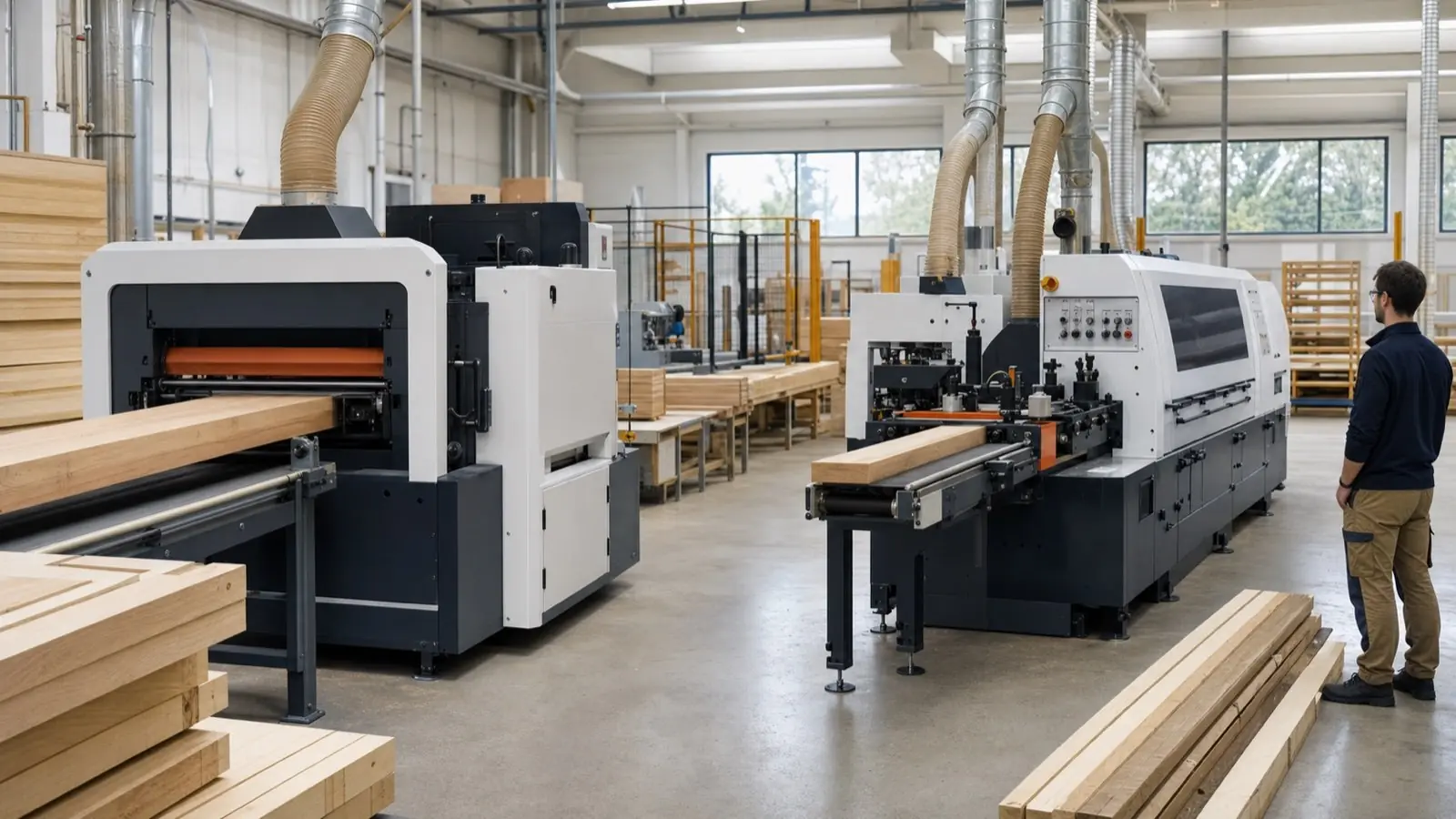
A فارة مزدوجة الوجه and a ماكينة تشكيل رباعية الجوانب can both make solid wood straight and smooth. But they solve different production problems. The right choice depends on which faces you must machine, the shape of your parts, and what happens before and after planing.
الإجابة السريعة
اختر فارة مزدوجة الوجه عندما يكون هدفك الرئيسي تسوية الوجهين العلوي والسفلي والتحكم في سماكة اللوح. اختر ماكينة تشكيل رباعية الجوانب عندما تحتاج إلى تشغيل الأوجه الطولية الأربعة في تمريرة واحدة أو إنشاء بروفيل على الحواف.
One machine is not automatically better than the other. A ماكينة تشكيل رباعية الجوانب has more working heads, but that extra ability only creates value when your parts need it.
ماذا تفعل الفارة مزدوجة الوجه؟
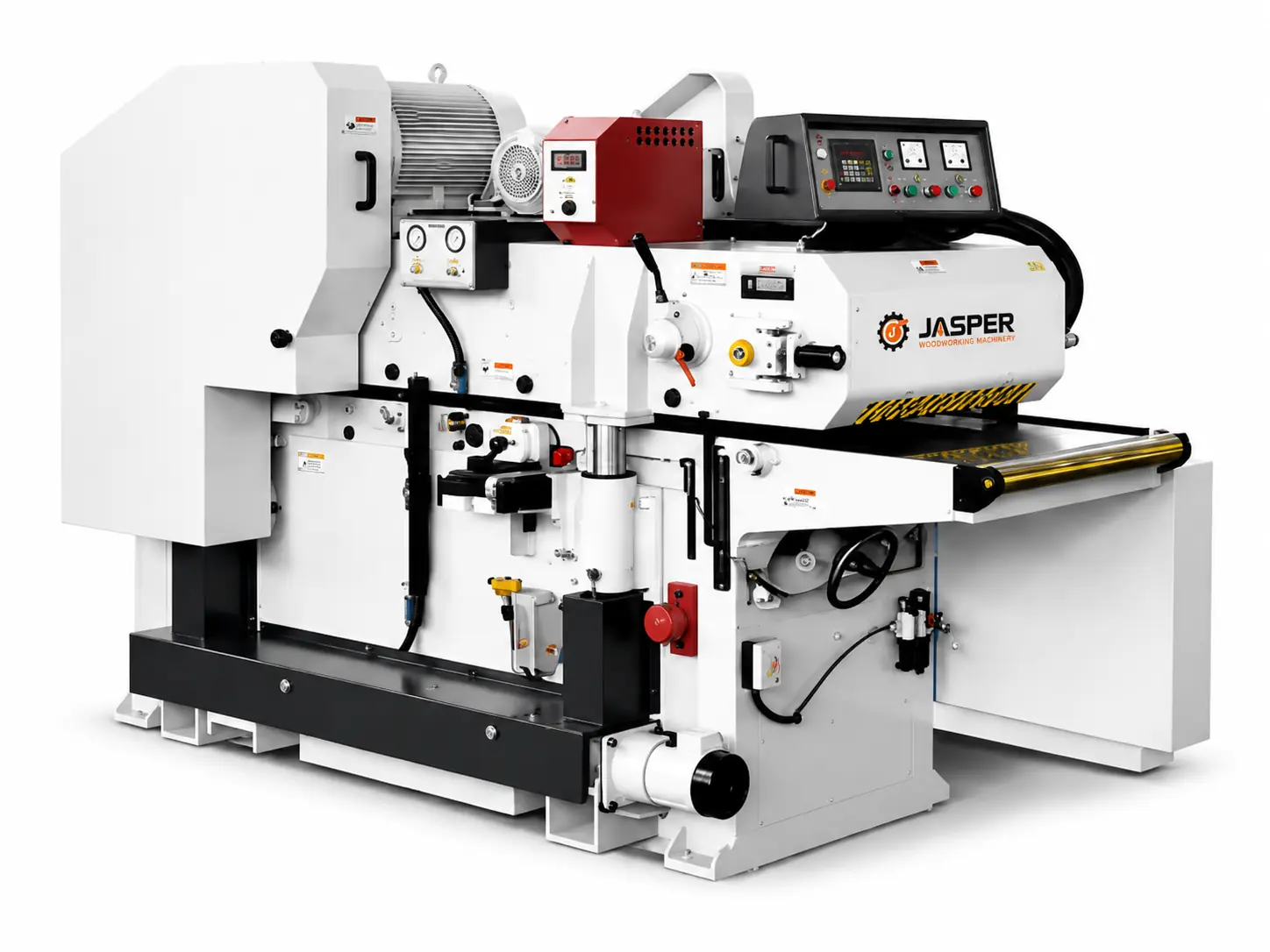
A فارة مزدوجة الوجه machines the upper and lower faces of a board during one feed. It is commonly used to create a flat surface and a stable final thickness. Wide boards, laminated panels and furniture blanks are typical workpieces.
For example, the Jasper REC-635AZ has a maximum working width of 620 mm. That wider working area suits parts where the top and bottom faces matter more than the two narrow edges.
ماذا تفعل ماكينة التشكيل رباعية الجوانب؟
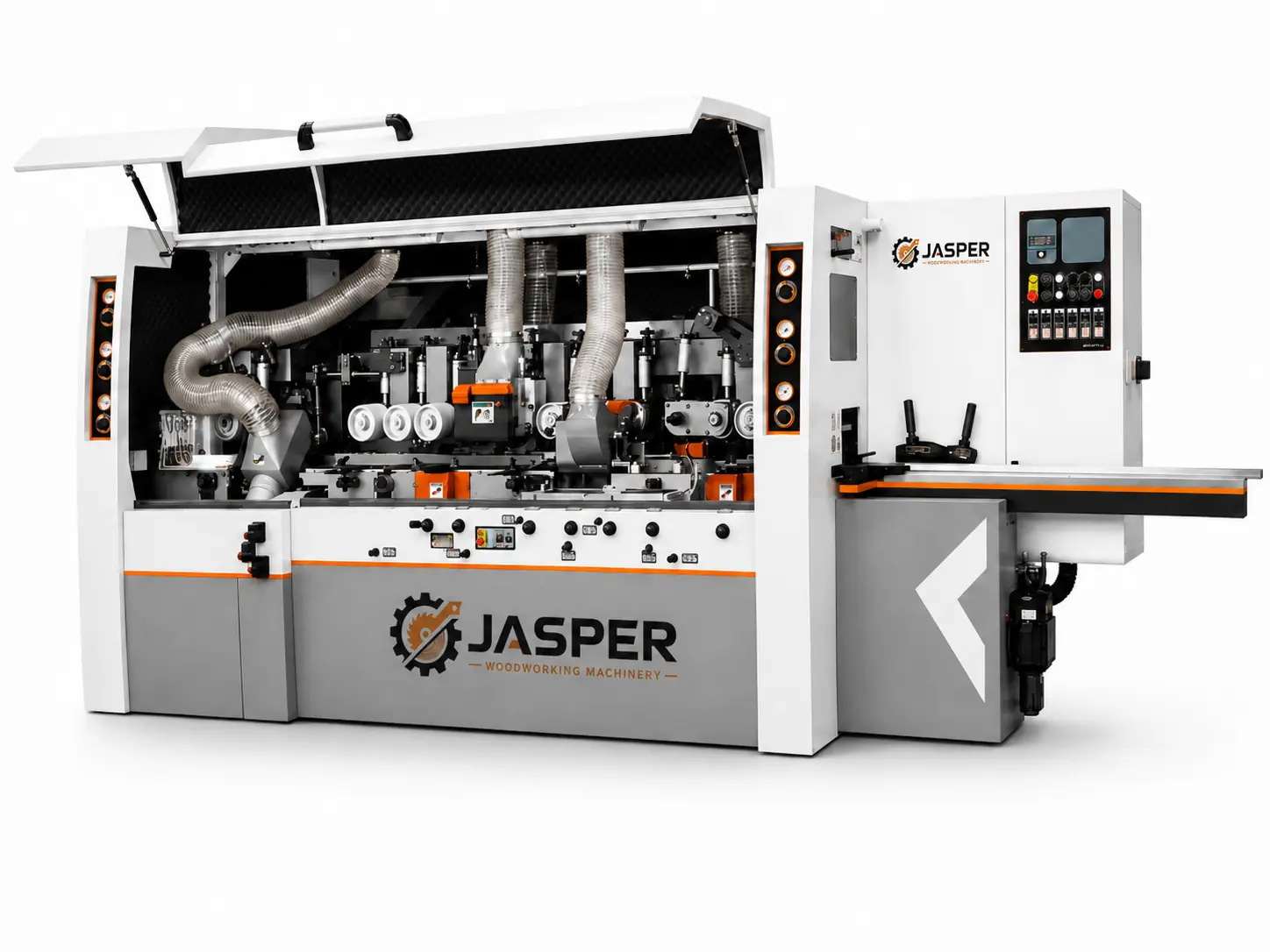
A ماكينة تشكيل رباعية الجوانب machines the top, bottom, left and right faces as the workpiece passes through the machine. It can square a long part, bring it to a finished cross-section, and form straight or shaped edge profiles.
This makes it useful for door frames, flooring strips, mouldings, rails and other long parts with a repeated cross-section. It can remove several handling steps when all four faces need work.
الفارة مزدوجة الوجه مقابل ماكينة التشكيل رباعية الجوانب
| نقطة القرار | Double-side planer | Four-side moulder |
|---|---|---|
| الأوجه المشغلة | العلوي والسفلي | العلوي والسفلي والأيسر والأيمن |
| الهدف الرئيسي | الاستواء والسماكة | مقطع نهائي وبروفيلات |
| قطعة العمل النموذجية | ألواح عريضة وألواح مسطحة وخامات | شرائح طويلة وقضبان وقطع إطارات |
| تشكيل بروفيل الحافة | ليس الغرض الرئيسي | تطبيق شائع |
| أفضل ملاءمة لسير العمل | Edges are already finished or handled later | Four faces should be completed in one pass |
اختر فارة مزدوجة الوجه عندما...
- Your parts are relatively wide.
- Final thickness is the key quality target.
- You mainly need flat top and bottom surfaces.
- The two side edges are cut or finished by another machine.
- You process boards or laminated components before later CNC machining.
اختر ماكينة تشكيل رباعية الجوانب عندما...
- Your parts are long and have a repeated cross-section.
- All four long faces need machining.
- You need a groove, bevel or other profile along an edge.
- You want to reduce transfers between separate planing and edge-shaping steps.
- You produce door frames, mouldings, rails, flooring or similar parts.
ثلاثة أمثلة إنتاج بسيطة
1. A laminated tabletop blank
The top and bottom must be flat and parallel. The part is wide, and the edges will be cut later. A فارة مزدوجة الوجه is normally the more direct choice.
2. A solid wood door frame
The long piece needs four finished faces and may also need an edge profile. A ماكينة تشكيل رباعية الجوانب can combine these operations in one feed.
3. A furniture component blank
There is no single answer. If the next CNC step will shape the sides, thickness calibration may be enough. If the blank must enter assembly with a finished cross-section, four-side processing may save more handling.
أسئلة تجيب عنها قبل الشراء
- What are the rough and finished dimensions?
- Which faces need machining?
- Do any edges need a profile?
- How much material must be removed?
- What machine comes before and after this step?
- What output do you need per shift?
Send sample drawings and real parts to the machine supplier. A test cut can show surface quality, feed stability and the amount of handling required better than a specification sheet alone.
الخلاصة
A فارة مزدوجة الوجه is the focused choice for two-face flatness and thickness. A ماكينة تشكيل رباعية الجوانب is the integrated choice for a finished four-face cross-section and edge profiles. Start with the part, not the head count. The part tells you which machine will remove real production steps.