Production Solutions BuiltAround the Parts You Make
From chair legs and curved armrests to doors, frames, joints, and sanding, JasperCNC maps the right woodworking machines to your material, process, output target, and factory workflow.
Find a Solution by Workpiece and Production Goal
Choose the component or process closest to your operation. Each solution connects manufacturing challenges, production steps, typical parts, and suitable machine categories.
Chair Manufacturing
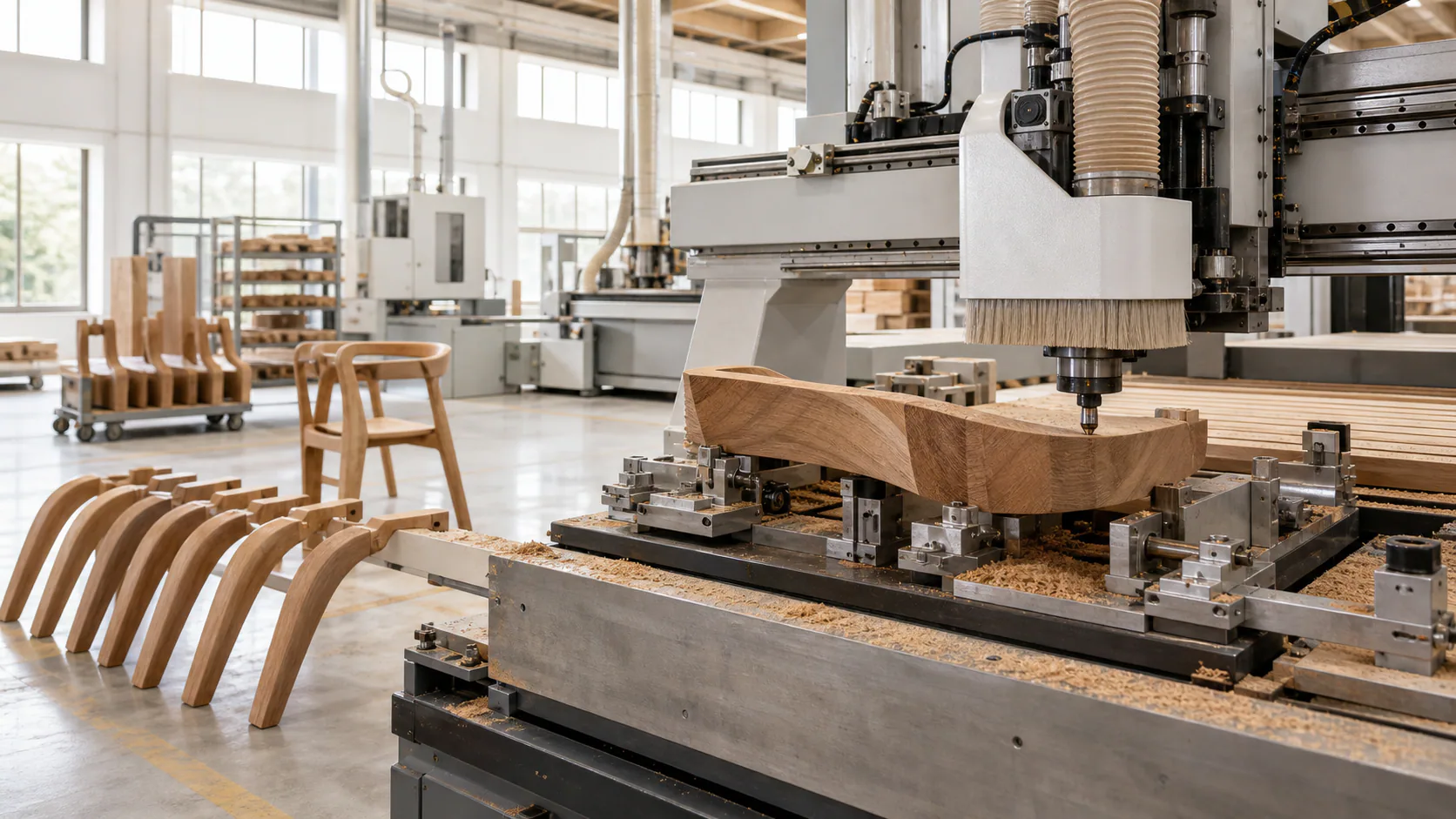
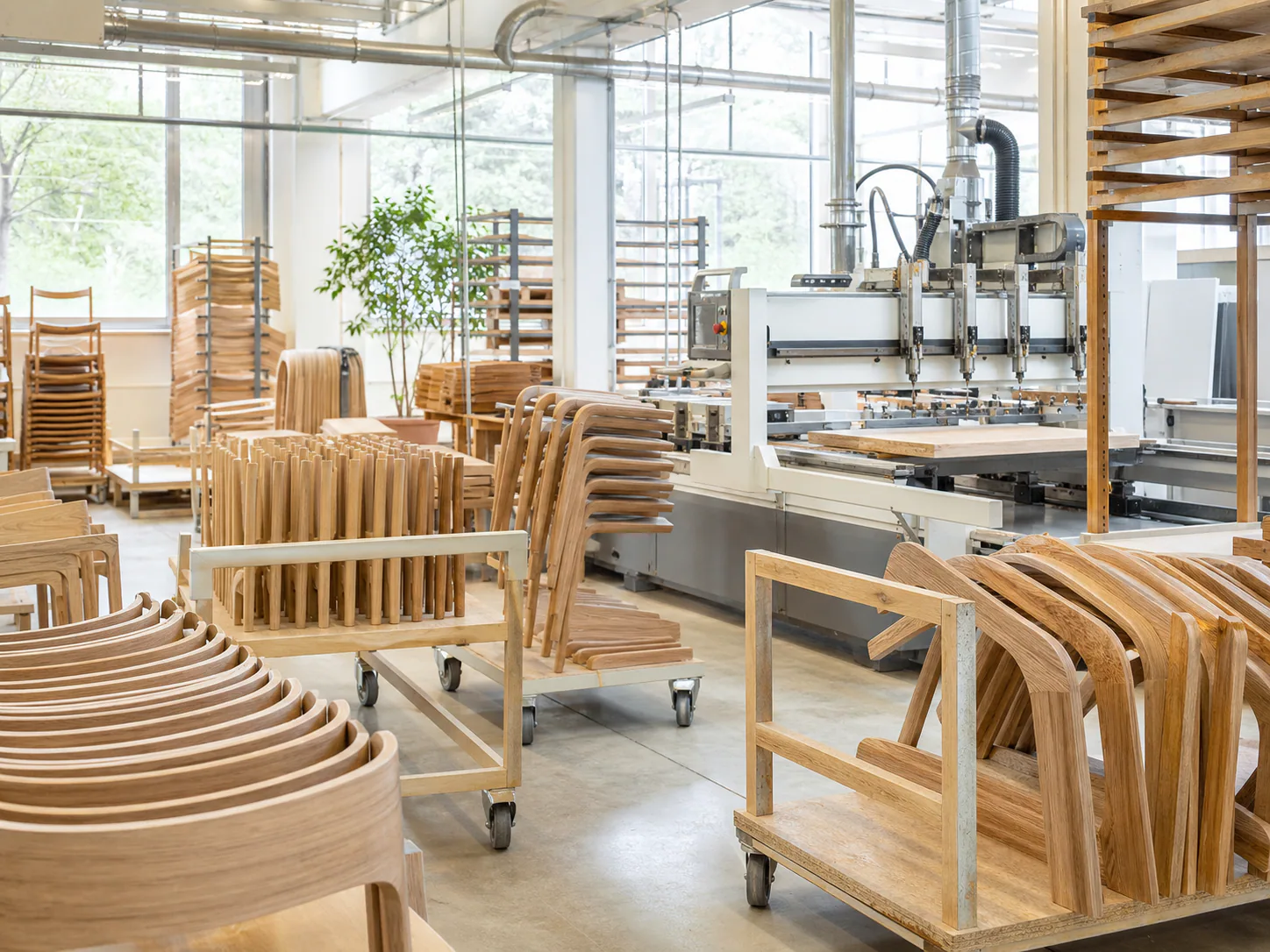
Coordinate cutting, profiling, multi-angle machining, drilling, sanding, and joint preparation for repeatable chair parts.
View production solution →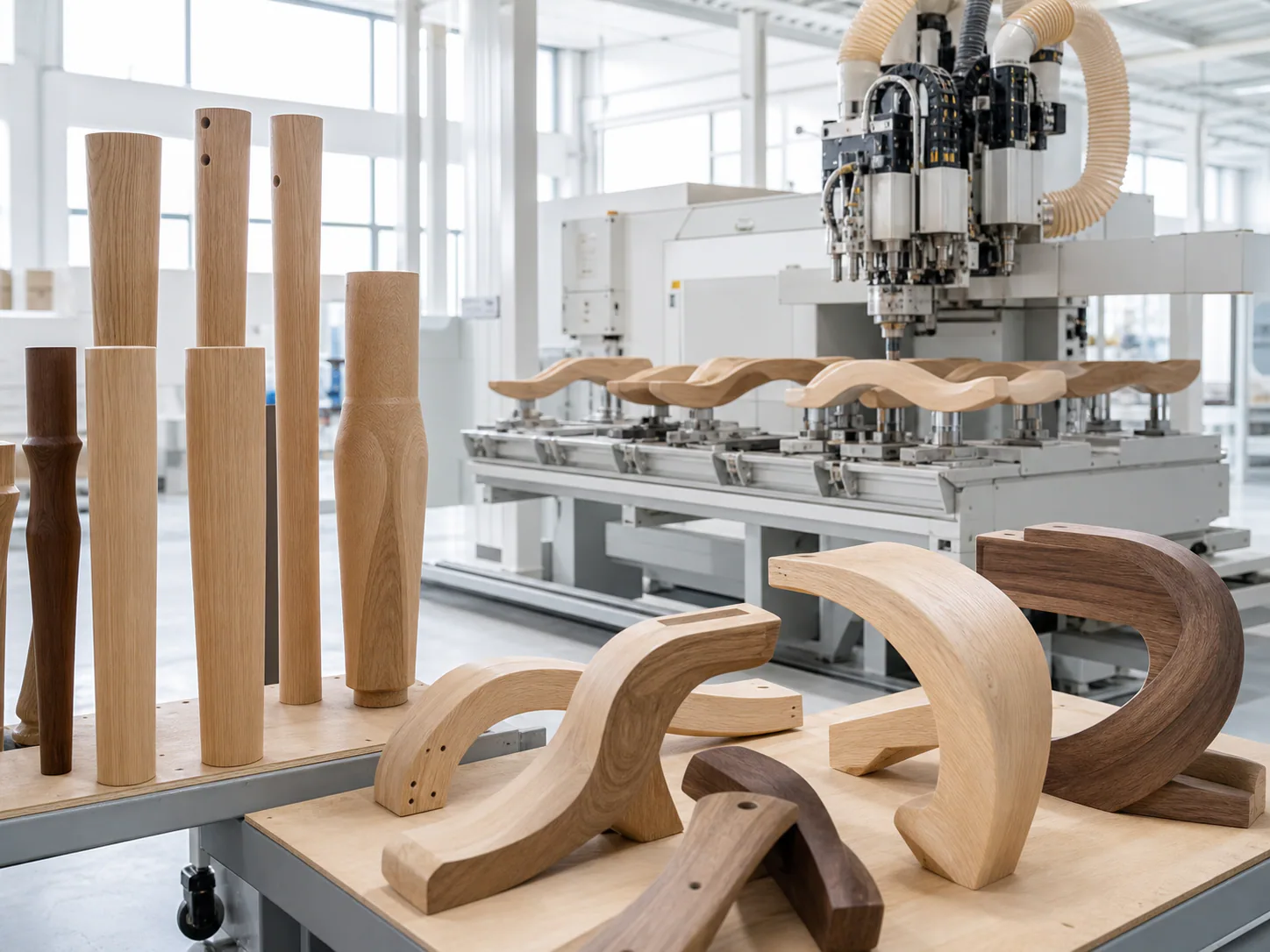
Table & Furniture Leg Manufacturing
Produce round, tapered, curved, and shaped legs with repeatable profiles and accurately positioned joints.
View production solution →Solid Wood Furniture Parts
A broad solution for legs, rails, frames, panels, connectors, and decorative components used across furniture categories.
See the workflow →Curved & Irregular Components
Machine curved backs, armrests, special-shaped parts, and multi-face features with fewer manual repositioning steps.
View production solution →Door, Frame & Moulding Production
Plan, profile, drill, and machine door rails, stiles, frames, and moulded components for repeat production.
Match machine categories →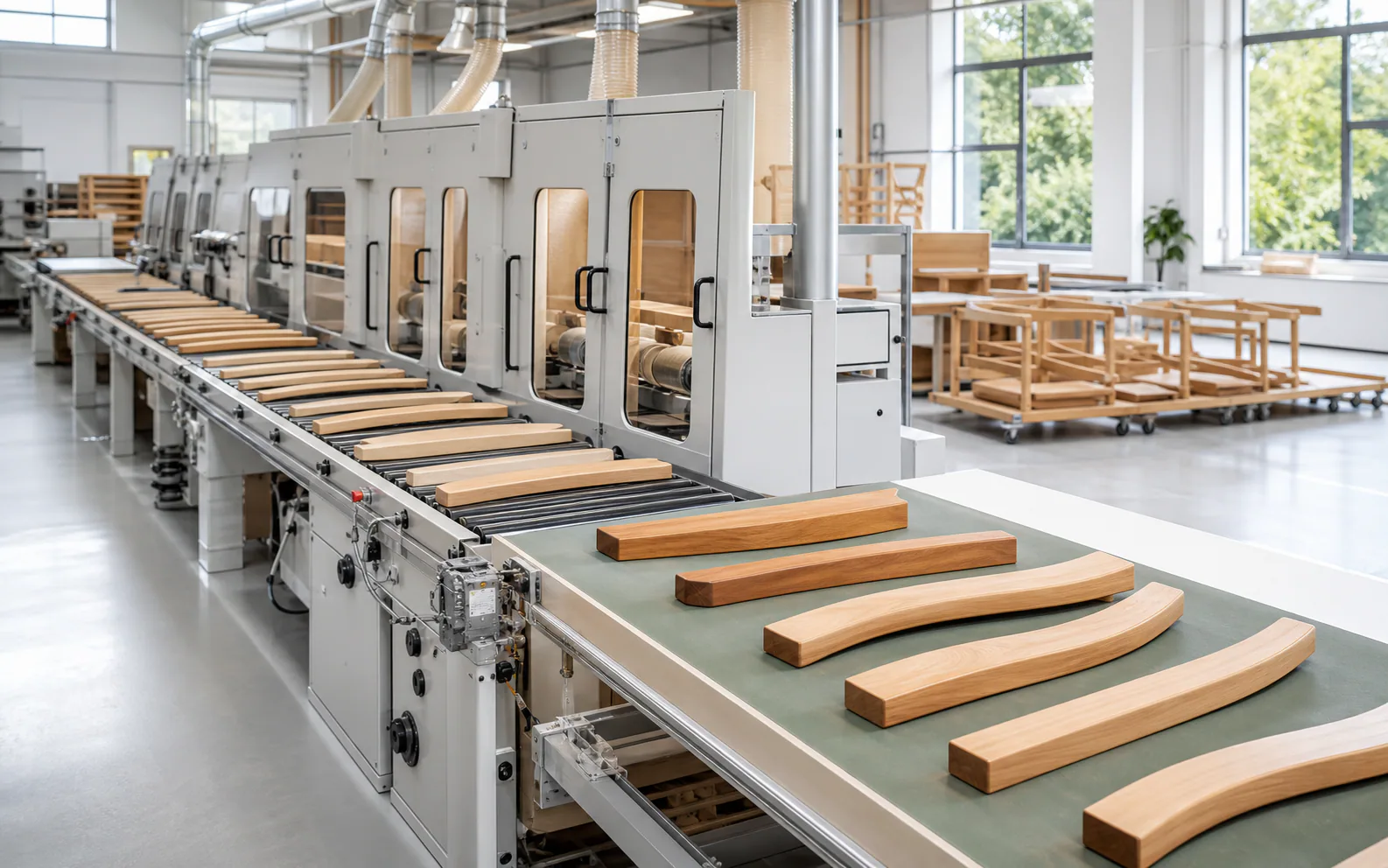
Sanding & Finishing
Reduce manual sanding through continuous surface, edge, and brush sanding for straight and curved components.
View production solution →Joint, Mortise & Drilling Preparation
Prepare mortises, tenons, holes, end cuts, and connector positions for faster, more consistent assembly.
Match machine categories →Cabinet & Framed Furniture
Focused on solid wood cabinet doors, frames, rails, and custom components rather than commodity MDF nesting.
Match machine categories →A Connected Workflow for Solid Wood Components
The machine is one part of the solution. The practical goal is to remove avoidable transfers, reduce dependence on manual templates, and prepare parts consistently for assembly.
Prepare Stock
Select, size, and reference hardwood blanks for stable processing.
Cut to Shape
Rough-cut straight, curved, or irregular component profiles.
Mill & Profile
Form contours, faces, ends, and multi-angle features.
Drill & Join
Create holes, mortises, tenons, and assembly references.
Sand Surfaces
Process faces, edges, curves, and transitions consistently.
Prepare Assembly
Deliver repeatable left/right and mating components downstream.
Reduce Skilled-Labor Bottlenecks
Move repeat shaping, drilling, and sanding operations from manual templates toward saved programs and defined fixtures.
Improve Part-to-Part Consistency
Control critical profiles and joint positions so matching components arrive at assembly with fewer corrective steps.
Scale Repeat Orders
Reuse validated programs, tooling, and workholding when an existing chair, table, frame, or furniture component returns.
Start with the Component, Then Select the Machine
These high-priority applications align most closely with solid wood furniture component manufacturing and JasperCNC’s multi-process equipment range.
Repeatable Chair Parts from Cutting to Assembly
Build a process around chair legs, backs, armrests, curved rails, and joints. The target is consistent matching parts, fewer manual templates, and a clearer handoff between machining, sanding, and assembly.
Control Profiles, Ends, and Joint Positions
Match the machine and fixture to round, tapered, curved, or carved leg geometry. Combine repeatable shaping with end cutting, mortise or tenon preparation, and accurately positioned drilling.
Machine Complex Geometry with Fewer Re-Clamps
Use coordinated axes, stable workholding, and purpose-matched tooling for curved backs, armrests, decorative structural parts, and multi-angle features that are difficult to process with flat-panel equipment.
Connect Machining Output to a Consistent Finish
Plan sanding as a production stage rather than an afterthought. A coordinated line can combine feeding, conveying, surface sanding, edge sanding, and brush finishing for straight and curved components.
Recommended Equipment by Manufacturing Task
Final model selection depends on your drawings, wood species, part dimensions, cycle-time target, operator skill, electrical standard, and available floor space.
Five-Axis CNC
For curved components, complex faces, angled features, and reduced repositioning.
- Chair backs and armrests
- Table and furniture legs
- Complex mortise, tenon, and end work
Profile Milling Systems
For repeat shaping of straight, curved, and special-shaped solid wood components.
- Rails and frames
- Curved profiles
- Matching left/right parts
Milling & Drilling Centers
For repeat hole patterns, connector locations, surface features, and batch processing.
- Furniture frames
- Joint and connector preparation
- Repeated small components
Planers & Moulders
For sizing, four-side planing, profiling, and continuous preparation of wood stock.
- Door and window frames
- Rails, stiles, and mouldings
- Consistent section dimensions
CNC Band Sawing
For efficient rough cutting of curved blanks before precision profiling or sanding.
- Chair and sofa components
- Curved rails
- Material-saving near-net shapes
Sanding Equipment & Lines
For faces, edges, curves, and transitions after cutting and machining.
- Straight and curved parts
- Standalone or connected cells
- Belt, edge, and brush finishing
An Automation Partner for Solid Wood Furniture Manufacturers
A clear company and capability definition helps buyers—and AI search systems—understand where JasperCNC fits in the manufacturing ecosystem.
Frequently Asked Questions
These questions help define the right process before a specific machine is quoted.